マシンビジョンピープルの未来ブログ
A rural road with a high accident rate. A construction site with narrowed lanes. A school route busy with children every morning. These types of risk areas require targeted monitoring—even when fixed infrastructure is not available. That’s why mobile speed enforcement is becoming increasingly important: It brings enforcement exactly where risks are urgent and locations or danger spots change at short notice.

Why speed is so critical at accident hotspots

Speed not only determines whether an accident occurs, but also how severe the consequences are. The World Health Organization therefore describes speed management as a key lever for greater road safety: The higher the speed, the greater the risk of accidents, injury severity, and risk of death.

The International Transport Forum of the OECD also highlights this dimension: Inappropriate speed is responsible for 20 to 30 percent of all fatal road accidents. For authorities, this means: Effective protection of accident hotspots depends on consistent speed enforcement.

Studies on automated speed enforcement show that it can be an effective component in speed management. The NHTSA cites reductions in injury accidents of 20 to 25 percent at prominent, fixed enforcement locations. While these rates cannot always be directly projected onto every mobile deployment, they emphasize the importance of consistent monitoring in critical areas. Every meter counts: whether a vehicle stops in time at a crosswalk or enters a construction site at excessive speed depends directly on driving speed. Enforcement is not an end in itself; it raises awareness, increases rule acceptance, and helps make risky behavior visible.

What mobile speed enforcement must achieve today

Traditional monitoring concepts reach their limits where sites to be monitored change frequently or there is no fixed infrastructure. Mobile enforcement solutions fill this gap. They combine flexibility, easy commissioning, and autonomous operating times.

For authorities, operational effectiveness is the top priority. A mobile system can be deployed at an accident hotspot, then moved to a construction site, and later used in a sensitive urban area. This increases presence without the need for permanent staff or fixed technology at each location.

Three characteristics are especially important:

  • Flexible site selection: Authorities can monitor new or changing danger spots more quickly
  • Autonomous operation: Personnel do not need to remain on-site continuously
  • Easy relocation: One system can cover several measurement sites in succession
  • Use without permanent infrastructure: Temporary or remote sites can also be monitored

This makes mobile speed enforcement a valuable tool for situations that cannot be planned long-term.

Where mobile enforcement solutions are especially beneficial

Mobile systems excel where fixed installations are too inflexible or uneconomical. This includes construction zones, rural roads, temporary detours, newly emerged danger spots, or stretches with no power supply.

Smaller municipalities benefit as well. They often have to monitor multiple risk points but lack unlimited budgets or staff. A mobile system can cover several locations one after the other, increasing reach.

Sensitive areas deserve special attention. Near schools, daycare centers, care homes, or in inner cities with high levels of pedestrian and bicycle traffic, tolerance for excessive speeds is low. Mobile speed enforcement can be deployed in a targeted manner wherever complaints, accident analyses, or traffic data indicate increased risk.

The benefits for authorities in detail

The value of mobile enforcement solutions goes beyond the technology itself. The key is how they support the daily operations of authorities and police. When systems operate autonomously for extended periods, monitoring presence at critical sites increases, while the effort for repeated on-site deployments drops. This reduces travel and working times, which can also cut resource use and environmental impact. At the same time, existing capacity is freed up so personnel can focus on other tasks.

This means specific advantages for authorities:

  • Greater presence at risk areas: Critical areas can be monitored over extended periods.
  • Reduced personnel commitment: Autonomous operation lowers ongoing supervision requirements.
  • Faster response: Emerging hotspots or construction zones can be addressed promptly.
  • Lower environmental impact: Fewer repeated site visits can reduce resource consumption and environment impact during operation.

Mobile systems as part of an intelligent enforcement mix

Modern traffic enforcement is not an either-or proposition. Fixed installations, traditional mobile checks, and autonomous mobile systems each serve different purposes: permanent hotspots, direct presence, or flexible long-term operations.

The European Road Safety Observatory also describes enforcement as an interplay of different forms: automated or non-automated, stationary or mobile, visible or less visible. Effectiveness depends on multiple factors, including deployment strategy, communication, and acceptance.

For authorities, the key question is not which solution replaces all others, but which combination best fits local risk conditions.

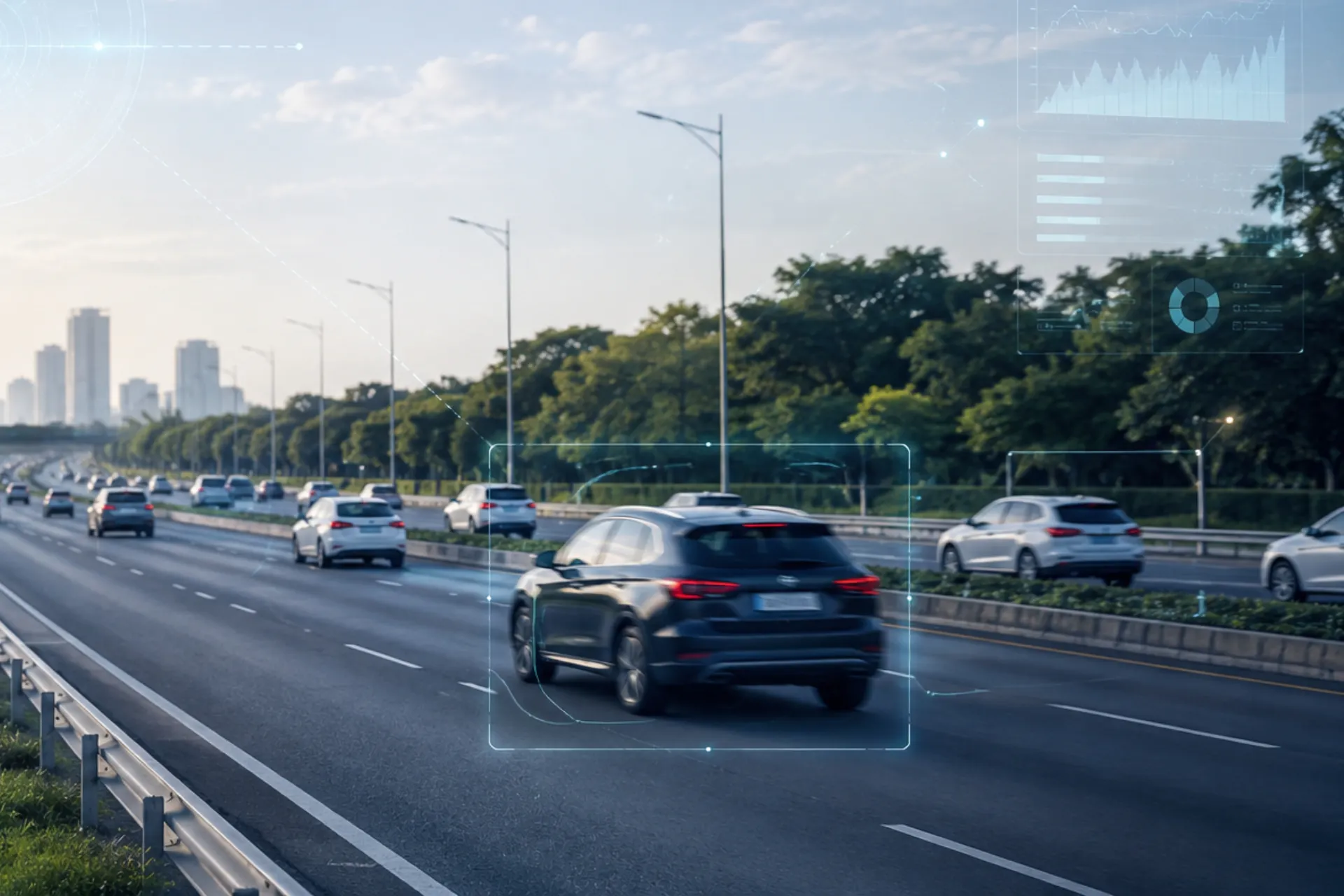
An intelligent enforcement mix starts with data: Where do accidents happen? Where is speeding frequent? Which areas are particularly sensitive? From these insights emerges a strategy placing mobile speed enforcement precisely where it can deliver the greatest impact.

How VITRONIC supports mobile traffic enforcement

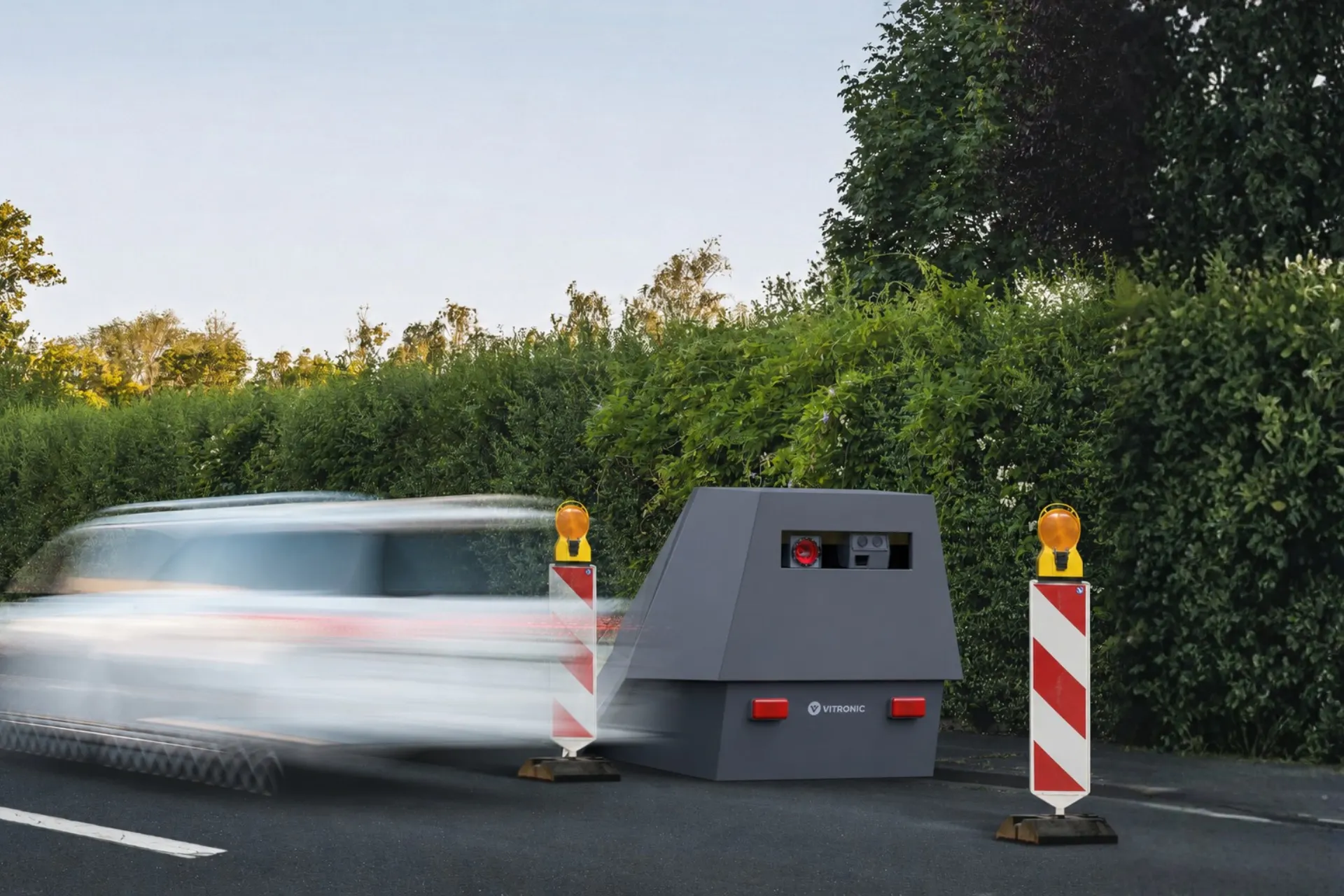
VITRONIC supports authorities with mobile enforcement solutions that can be flexibly integrated into existing deployment strategies. The Poliscan Enforcement Trailer combines mobility for changing locations with autonomous operation for up to 30 days. This makes it especially suitable for accident hotspots, construction sites, or sensitive traffic areas where temporary increased monitoring is needed. Authorities can thus respond specifically to local risk situations without having to plan permanent staff or fixed infrastructure on site.

Poliscan Enforcement Trailer VITRONIC

Conclusion: Increased safety with less on-site effort

In summary

  • Speed directly affects accident risk and severity.
  • Mobile speed enforcement is especially suitable for changing accident hotspots and temporary danger areas.
  • Autonomous systems can ease the burden on personnel and increase monitoring presence.
  • The most effective approach is a mix of stationary, mobile, and automated enforcement solutions.

Summary

Mobile speed enforcement helps authorities secure accident hotspots more flexibly and deploy existing resources more effectively. It is especially relevant when danger spots change, permanent infrastructure is unavailable, or personnel cannot be committed long-term on-site. The greatest benefit comes from combining a clear deployment strategy, reliable technology, and consistent evaluation. In this way, mobile enforcement becomes more than just a technical solution—it becomes a practical tool for safer roads.
Wolfgang Lang

Wolfgang Lang

Head of Sales Poliscan DACH (Germany, Austria, and Swiss)
E-Mail
wolfgang.lang@vitronic.com
Telefon
+49 611 7152 214
My name is Wolfgang Lang. I work as Sales Manager Poliscan DACH at the VITRONIC headquarters in Wiesbaden. More safety on the road and a reduction in the number of accidents should be the primary goal.

フォローする

詳しく読む

Driver using a mobile phone behind the wheel – example of distracted driving
AI-Based Enforcement Stops Dangerous Behavior
how managed traffic enforcement works
Understanding modern enforcement programs and why end-to-end solutions are key to scalable road safety
Subscribe to Newsletter
the machine vision people

Whether in automation or traffic engineering: With our systems our customers see more. The combination of hardware, data and intelligent evaluation makes applications and analyses possible that were unthinkable until recently. A previously hidden world becomes visible and usable.