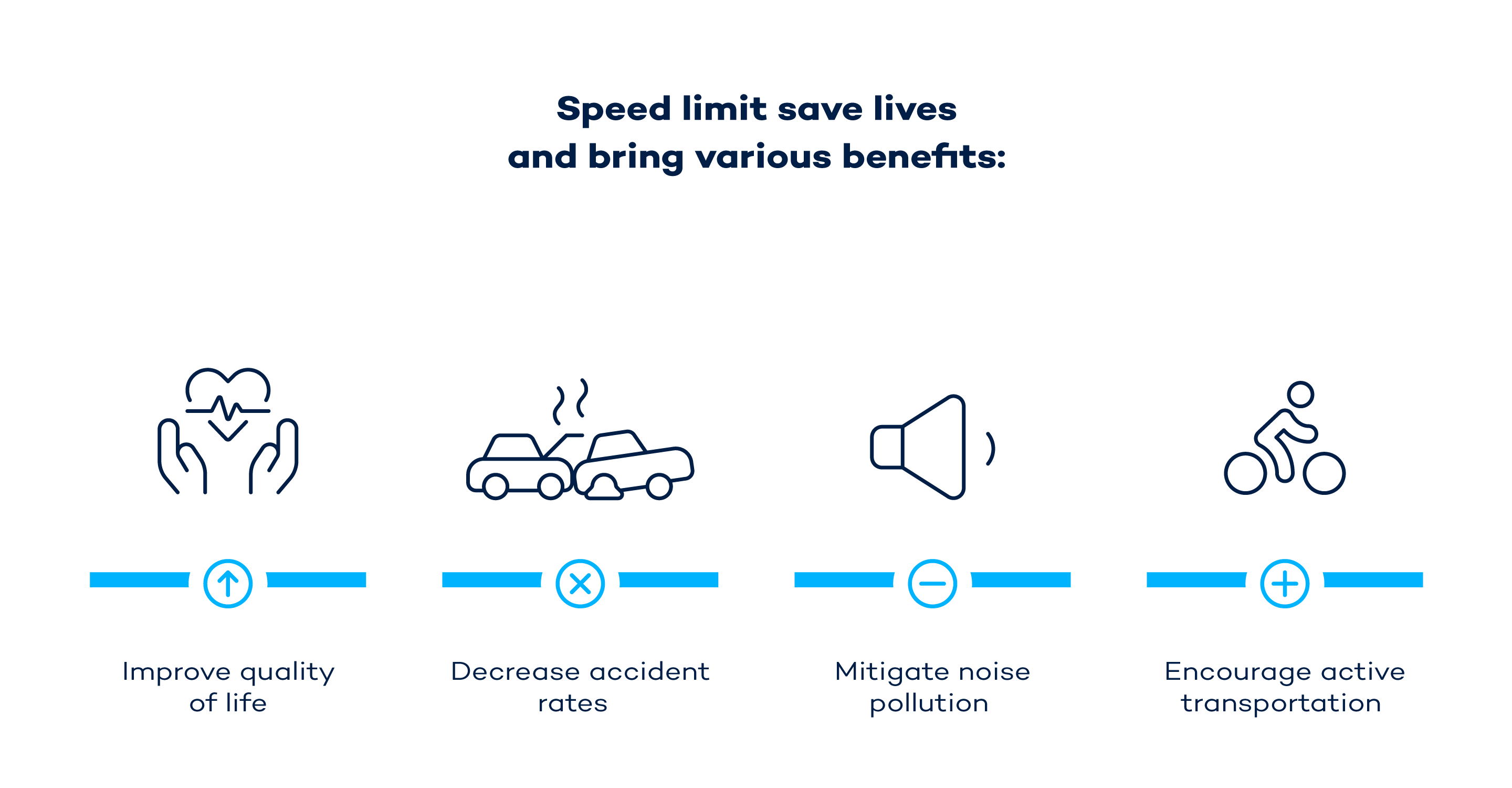
What makes a city “livable”? Deciding factors include housing conditions, healthcare, recreational amenities, environmental protection measures and traffic regulations.
Within the transportation sector, we see that an increasing number of cities and municipalities are adopting innovative solutions to improve road safety. They opt for a modern traffic policy that aligns with the shift towards sustainable mobility and fulfills a primary need of citizens: to move quickly and safely.
How do we create an environment where every road user can move quickly and safely? In general, modern mobility concepts should be designed to minimize the use of private motor vehicles and promote active mobility.
This leads to increased micro mobility and consequently, a greater number of vulnerable road users (VRUs), such as pedestrians and cyclists, who are more susceptible to accidents.
The protection of VRUs must be taken into account when implementing modern mobility solutions. Examples include a high number of bike lanes and traffic-calmed zones.
Cutting edge sensor technology can play a pivotal role in enhancing road safety at traffic intersections, which are prone to an increased number of accidents. Research projects are ongoing to investigate this, such as at an intersection in Potsdam, Germany. State-of-the-art sensors are installed to monitor both motorized and non-motorized traffic. The goal is to control pedestrian traffic lights in a way that ensures a safe road crossing.
The most straightforward and effective solution, however, is to reduce the speed limit and establish 30 km/h zones in urban areas
As of May 2021, the WHO (World Health Organization) recommends a global speed limit of 30 km\h for urban areas.
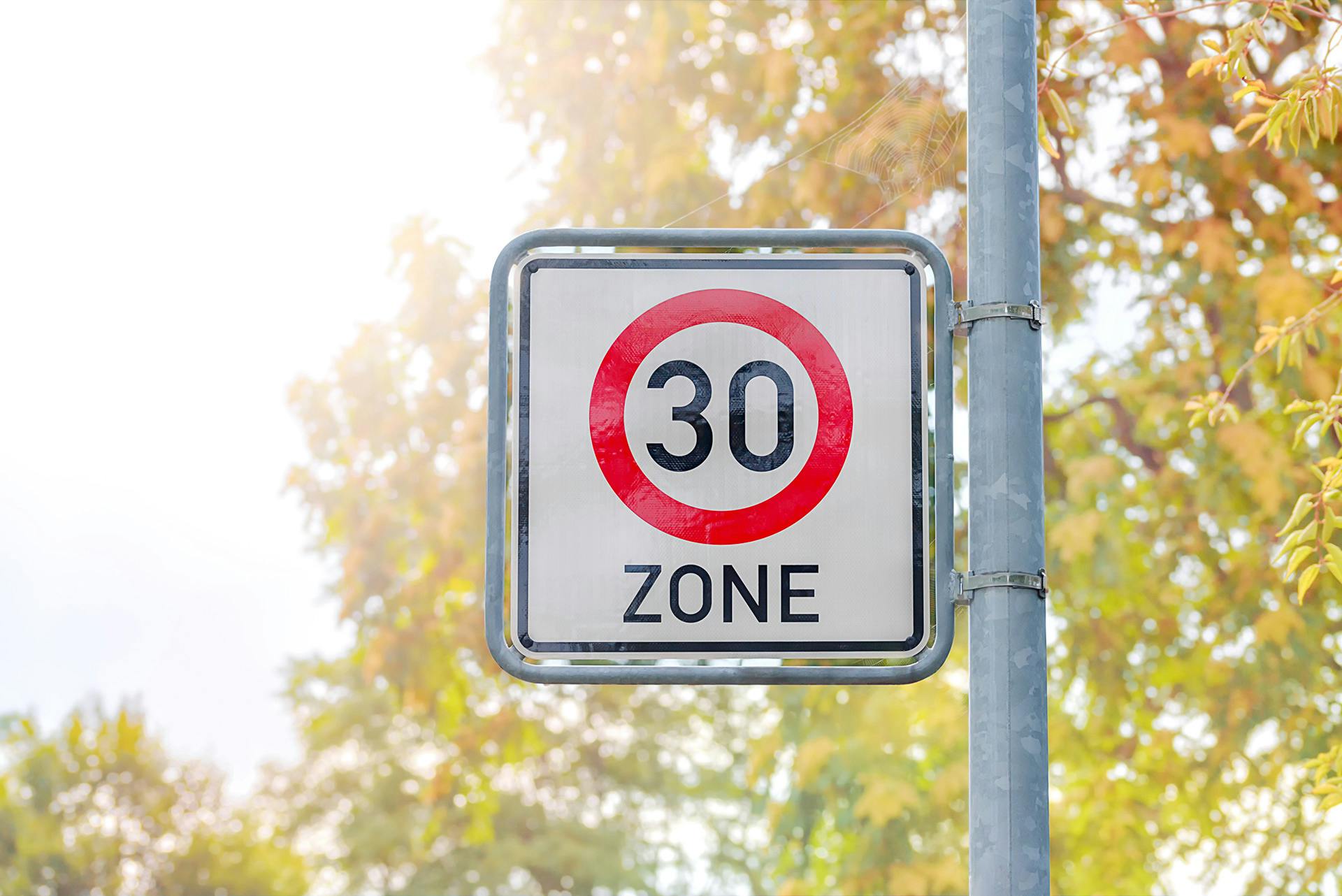
Overall, the WHO concludes that even a 1 km/h increase in average speed leads to a 3% higher accident risk and approximately 5% more people die as a result. Theoretically, it takes only an additional 48 seconds to cover a kilometer at 30 km/h as opposed to 50 km/h. Practical evidence indicates that the average speed driven in urban areas is already between 20 and 30 km/h.
Merely establishing speed limits does not yield an increase in road safety. Effective and flexible surveillance is essential to protect all road users.
Unenforced speed limits create a false sense of security as they are often violated. In 30 km/h zones, many drive at speeds of 40 km/h or more, despite the fact that accident risk scales exponentially with an increase in speed.
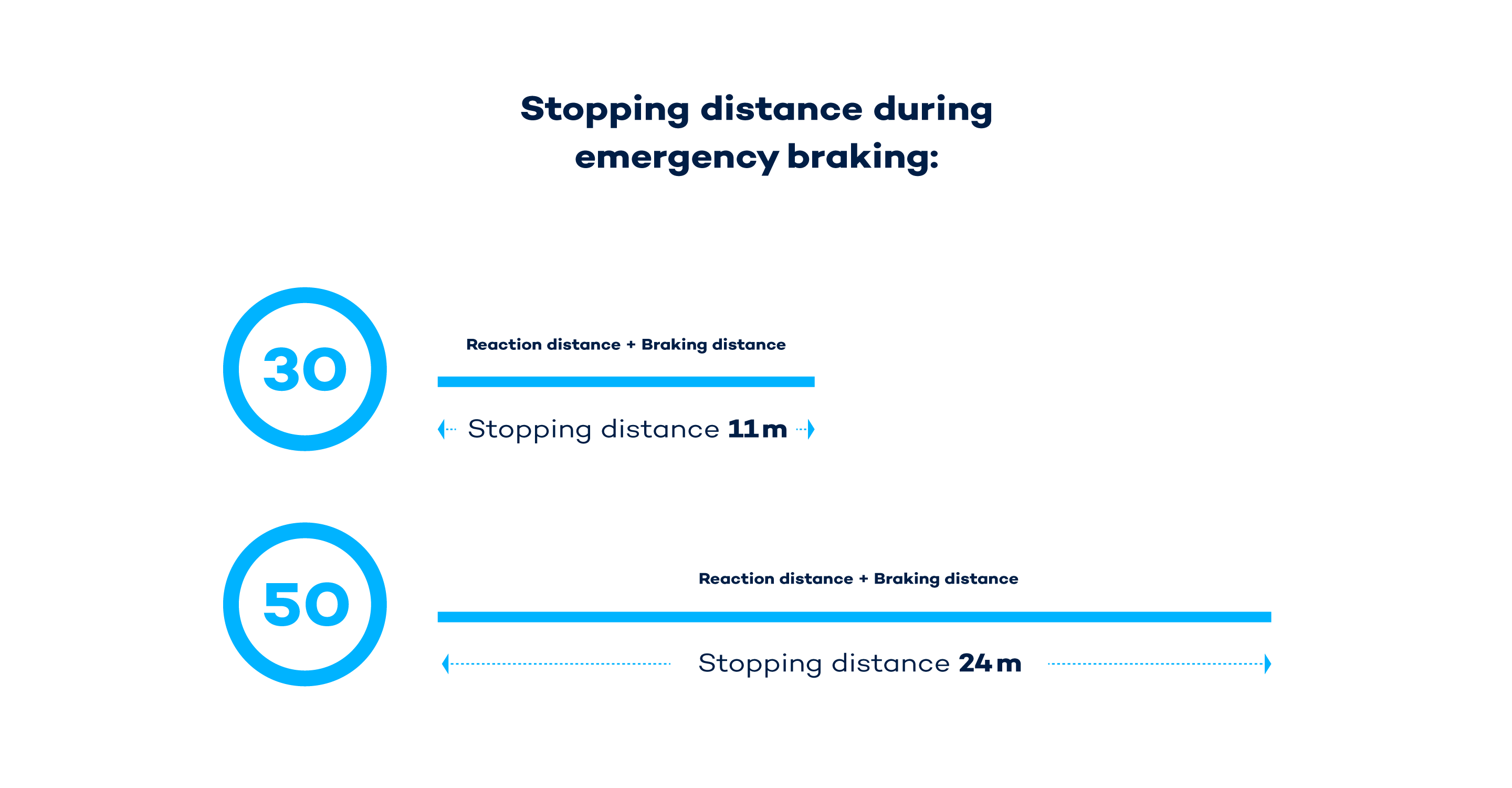
In the case of emergency braking at 40 km/h, the stopping distance (reaction distance + braking distance) is at least 20 meters. At 30 km/h it's only 11 meters. The risk of fatal injury in an accident decreases by approximately 50% at 30 km/h compared to 40 km/h. These figures clearly indicate that a seemingly minor speed difference significantly compromises road safety.
Brussels implemented a 30 km/h speed limit in January 2021, combined with traffic controls. In the year of its introduction, fatal accidents were halved and accidents involving severe injuries decreased by a fifth.
Helsinki opted for initial 30 km/h zones in the city center and some residential areas as early as 2004, accompanied by comprehensive speed monitoring. In 2019 the regulations were extended to almost the entire city area, marking the first year with zero pedestrian or cyclist fatalities, in line with the Vision Zero initiative.
In Edinburgh, Scotland, the number of road traffic accidents dropped by 40% following the introduction of a 32 km/h speed limit and road traffic mortality decreased by 33%. Accompanying measures included automated speed monitoring.
A final example from the USA: In 2021, when New York City reduced the speed limit to 32 km/h in five areas (the Bronx, Brooklyn, Manhattan, Queens, and Staten Island), the number of road traffic injuries dropped by 14% and those with injured vehicle occupants by 31%. Since 2022, speed limits have been monitored around the clock. Research shows that this preventive measure reduced speed violations by 72%.
30 km/h speed limits in urban areas are a sensible measure for making traffic more efficient and safe. However, it is crucial to enforce these limits.
With VITRONIC speed measurement systems, 30 km/h zones can be efficiently monitored, safeguarding lives, and ensuring greater safety for all road users.