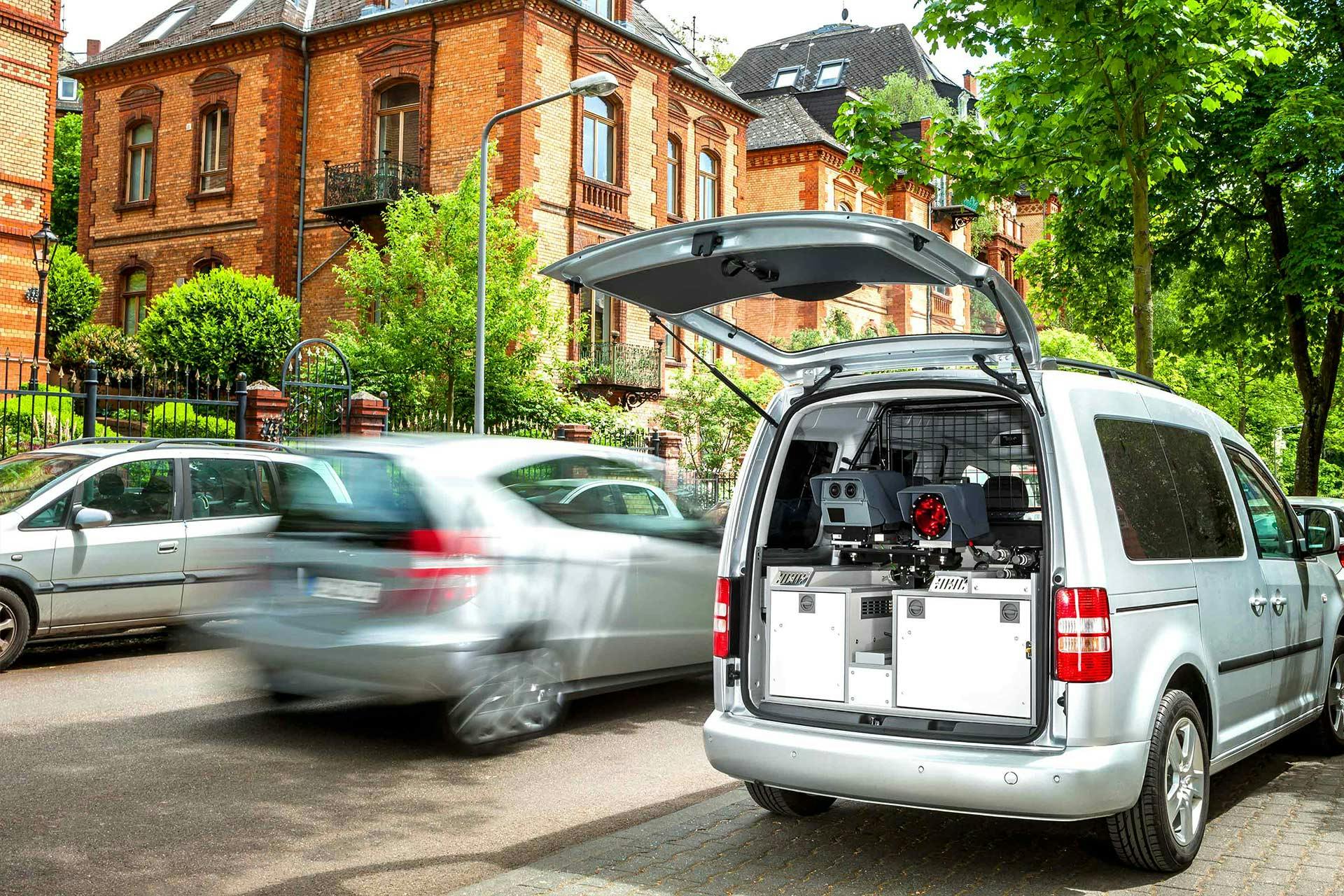
Video-based traffic technology is a major step forward in optimizing traffic management and improving road safety. Due to its affordability, application diversity and innovation potential, the technology can be a key enabler of the traffic transition, helping to transform traffic and accompany new traffic scenarios. Today's systems have many capabilities that can be rapidly deployed through expertise in hardware sensor technology and image processing.
Some challenges remain, but approaches are already being taken to overcome them and to continue expanding the capabilities of video- and AI based traffic management systems and traffic enforcement solutions. Where the journey will take us is yet to be seen. In any case, we are already setting the course for the traffic of the future.
Smart MobilityMobility on the Move
How video-based systems help shape the traffic of the future
At a Glance
- Video-based systems combine AI and powerful hardware – the foundation for modern traffic monitoring and management.
- Cameras act as the central sensors for detection, tracking, and documentation of traffic data.
- Applications include red light monitoring, toll control, bus lane monitoring, VRU detection (e.g., e-scooters, cyclists, pedestrians).
An “old” technology
In the wake of the traffic transition, the increasing number and diversity of road users are leading to ever more complex scenarios and thus to more data that needs to be considered. So, whether it is more future-proof traffic management, better road planning, more comprehensive traffic monitoring or innovative approaches to autonomous driving, the path to optimizing traffic and reducing road accidents calls for intelligent systems that are capable of capturing and processing this new multitude of diverse data and transforming it into efficient applications.
But does this sustainable form of traffic technology already exist? The answer is yes, but it is not as new as most will assume. Instead, the “well-known” video technology is driving things forward.
A new generation of traffic systems
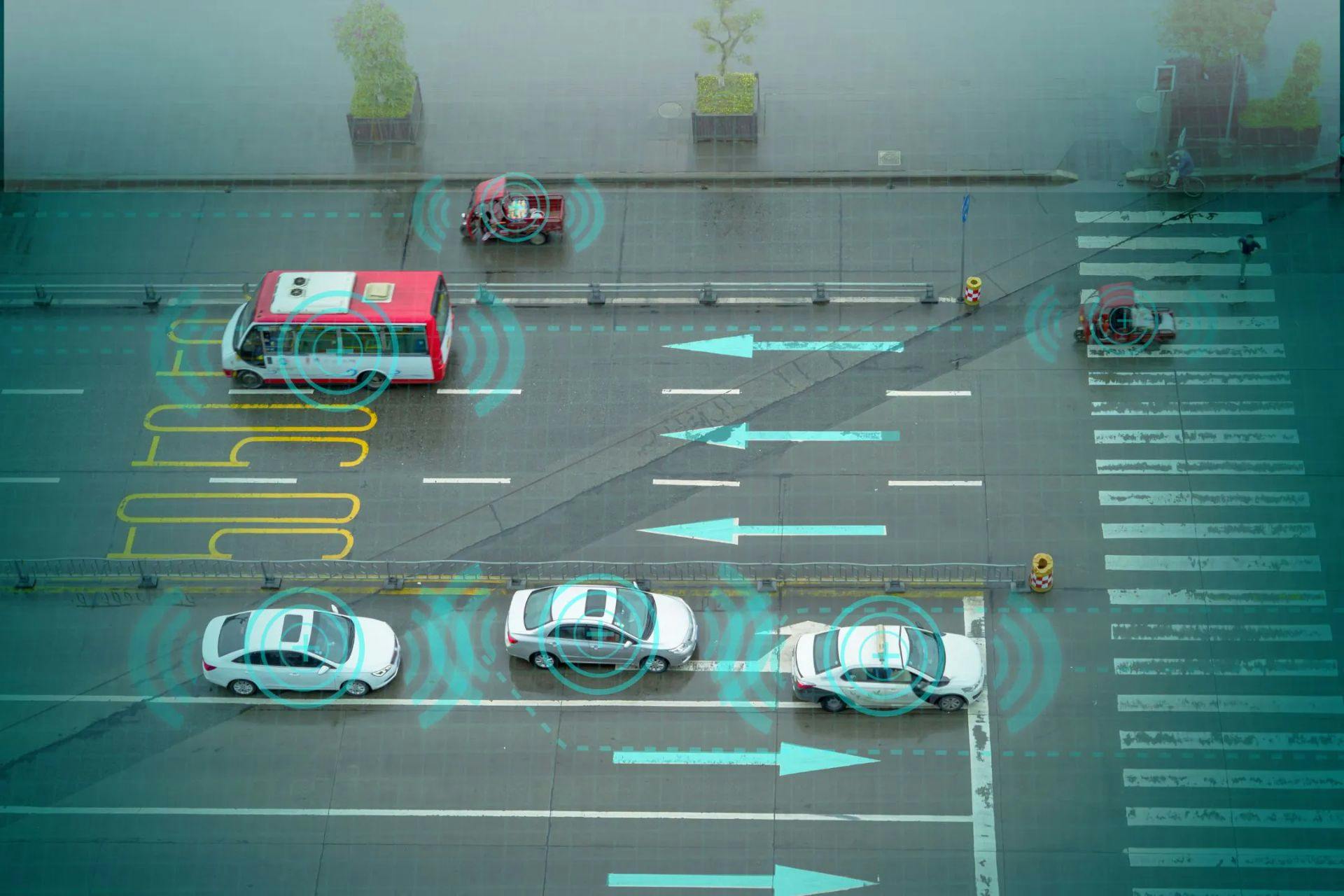
Cameras have been used to monitor traffic for decades, but until now they have tended to be passive observers. In lidar- or radar-based systems the camera is usually only used for image recording to document violations conclusively. With the latest generation of video-based traffic enforcement systems, the matter is different. Here, the camera is the central sensor for detection, tracking and documentation.
This evolution is based on several tech advances:
One is the availability of better performing, more compact hardware that includes faster, more effective processors. These contribute to the ongoing miniaturization, which is increasingly enabling more processing capacity in a small space. Ideally, this means that the data captured by the camera can be analyzed directly in the camera housing, i.e. on site. Larger external components, like additional evaluation processors in control cabinets, are no longer necessary. This makes the implementation of projects much more flexible as well as cost-effective, and additionally reduces the energy consumption.
Also, central processing centers are less important for these systems, which reduces the susceptibility of operations to faults and allows them to be used even without a connection to high-speed internet.
AI for an eye
The second essential advance for video-based traffic solutions is the progress in modern camera technology. Today, industrial cameras have almost all the capabilities of the human eye, from color recognition and "seeing" very small details to a wide field of view, which makes it possible to cover large areas with a multitude of different road users. Laser-based systems, as advantageous as they are in terms of precision, have their limitations here. They do not capture color and sometimes only contours or certain sizes.

AI-based cameras for traffic control have almost the same capabilities as a human eye
The third technological game changer can be attributed to the trend of softwarization: With easy access to powerful hardware, the performance and type of applications of video-based traffic systems are no longer solely a matter of hardware. Rather, they depend primarily on the software, and for video-based systems, it's all about intelligent solutions. To convert the excellent vision of the camera into applications, modern video-based traffic systems mainly turn to Artificial intelligence – paving the way for more advanced AI traffic control.
One variation on how this smart road technology is implemented nowadays is through a hybrid method, i.e., the combination of Convolutional Neural Networks (CNNs) and mathematical models. The CNNs can be trained with image material and provide better performance than algorithms in detection and identification. They are more differentiated in recognizing objects, and more accurate in capturing them. For example, vehicles driving close together or strong shadows do not irritate CNNs, both of which were and still are a problem with conventional methods. After the neuronal network has processed the data, algorithms are applied to describe the vehicle movement mathematically.
This softwarization in traffic technology makes systems easier to optimize, more sustainable and more scalable. Moreover, new as-a-service business models can be implemented a lot easier.
A multitude of applications
The technical advances and the associated use of the camera as a stand-alone sensor result in a wide range of possible applications for traffic technology, making video-based traffic systems a decisive step towards more effective traffic management and, above all, greater road safety.
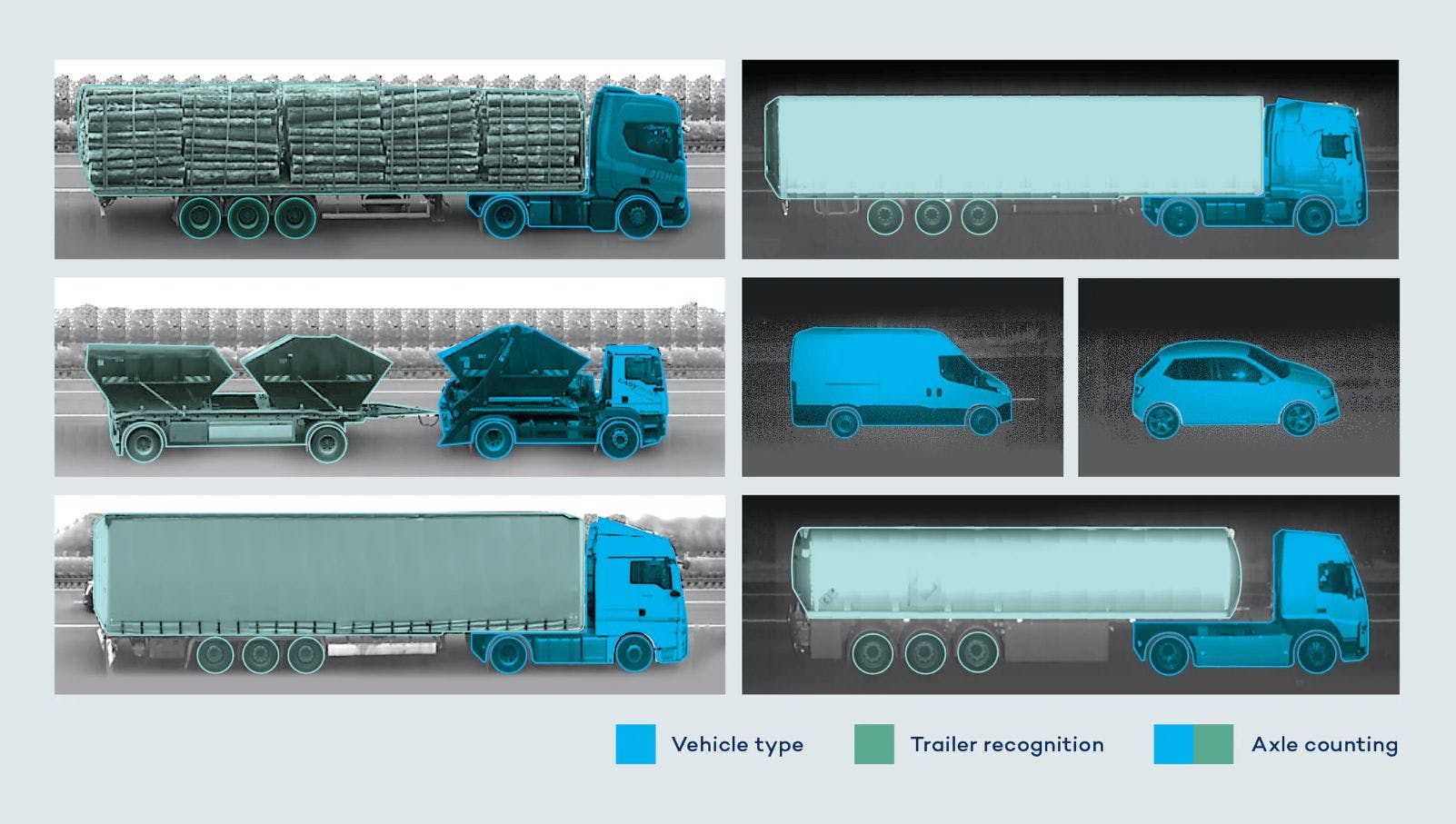
Applications include red light enforcement, toll enforcement, bus lane surveillance, axle counting, environmental badge detection, distracted driving violations such as talking on the phone behind the wheel, and many more. Even very small electric vehicles (EVs), such as e-scooters, can be captured by these systems, which previous technical solutions could hardly guarantee. To them, for instance, the license plates on these vehicles were too small and the areas where they drove were not or could not be monitored. This expanded detection capability of video-based systems, notably, is also a huge plus for the protection of VRUs, vulnerable road users such as cyclists and pedestrians.
However, the added value is not limited to traffic enforcement alone. The technology can be of great benefit to effective traffic management as well. From detailed traffic counts and recording weather conditions to smart mobility – the range of applications is vast."
Traffic optimization could be guided by the number of certain types of vehicles on a certain road in a certain period of time. For example, the usage of bus lanes at night could be reviewed and this knowledge incorporated into traffic planning. Another application scenario would be traffic light phase control in the sense of intelligent infrastructure – or AI traffic management – that reacts to approaching pedestrians.
To cut to the chase: With video-based systems, anything that can be seen can theoretically be analyzed and utilized. And none of this is a matter of a distant future! Turnkey suppliers with expertise in hardware sensor technology and image analysis can already realize new applications for video-based traffic enforcement quickly and put them on the road swiftly - from planning to project implementation to service. At Vitronic, we are already employing the technology for traffic applications such as red light enforcement, VRU detection or toll enforcement.
The future of traffic
Currently, video-based traffic systems mainly use monotracking because it is difficult to interlink multiple sensors and their data. Nevertheless, this sensor fusion could be the path of the future, especially when combining different sensors whose strengths complement each other. The radar's range could be supplemented by the camera's sharp vision, thereby eliminating classic radar errors such as ghosting, or the laser's accurate measurement could support the camera's detection capabilities. The possibilities seem limitless.
What makes video-based traffic technology itself so interesting as a future technology are two things:
First, its innovation potential. For developers, it is an affordable technology with lower entry barriers compared to others, which encourages creative problem solving. This is a great opportunity and makes the solution class extremely sustainable.
Secondly, the comparatively low investment it requires for acquisition and implementation, coupled with the also resulting faster ROI. This is particularly interesting for smaller municipalities, where red light enforcement, for example, was previously difficult to refinance. The possibility of as-a-service models and the ease of optimization provided by the softwarization also contribute to the economical viability of the video-based solution.
This new affordability of traffic enforcement enables more states and municipalities to utilize it, and that in turn supports a comprehensive realization of the traffic transition on the one hand, as well as an across-the-board increase in traffic safety on the other – making a critical contribution to Vision Zero.
Conclusion
In brief
- Video-based traffic technology has a wide range of applications, both in traffic enforcement and management
- Compared to other systems, video-based traffic systems are more cost-efficient and flexible, less expensive to implement and offer additional areas of application
- Due to low entry barriers for developers and the growing technical possibilities, the technology is extremely sustainable and stimulates innovation