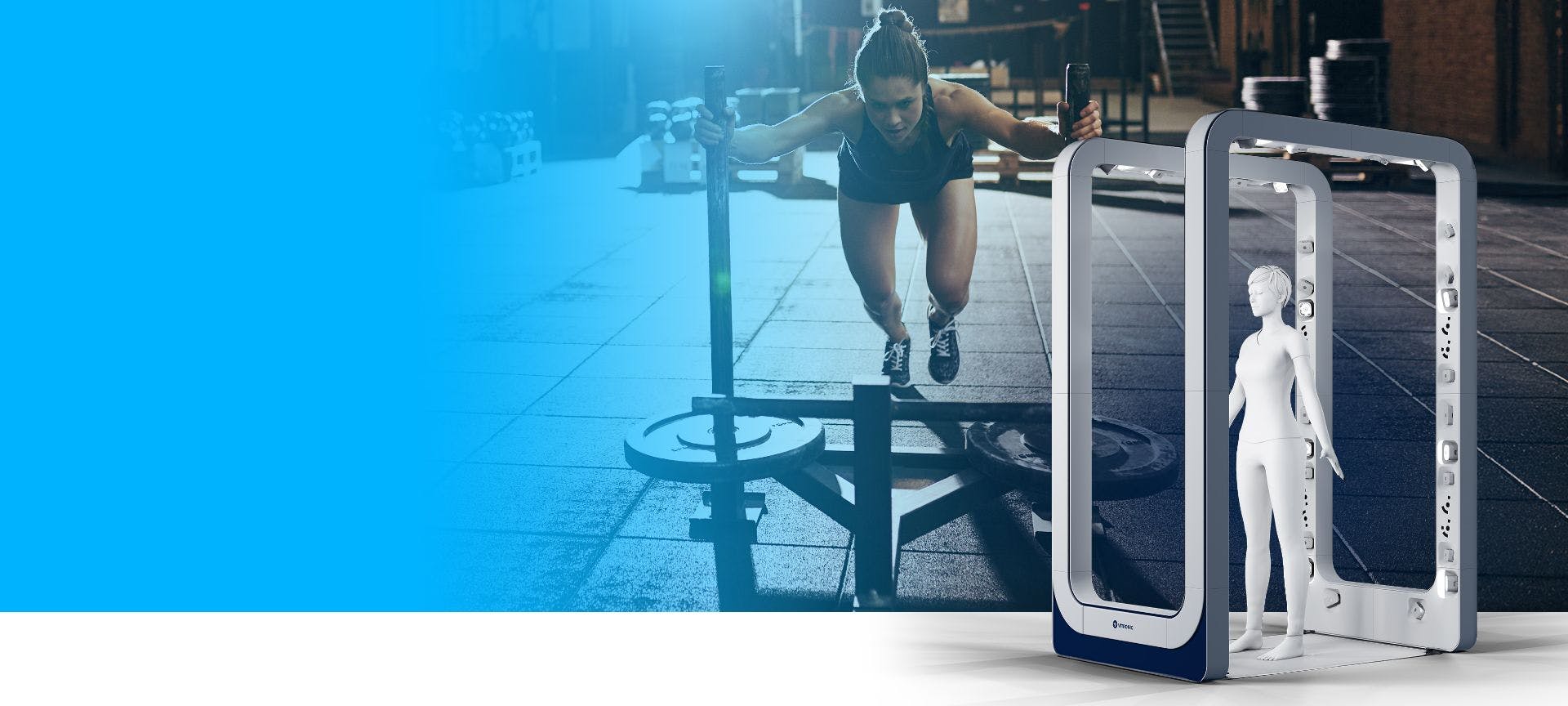
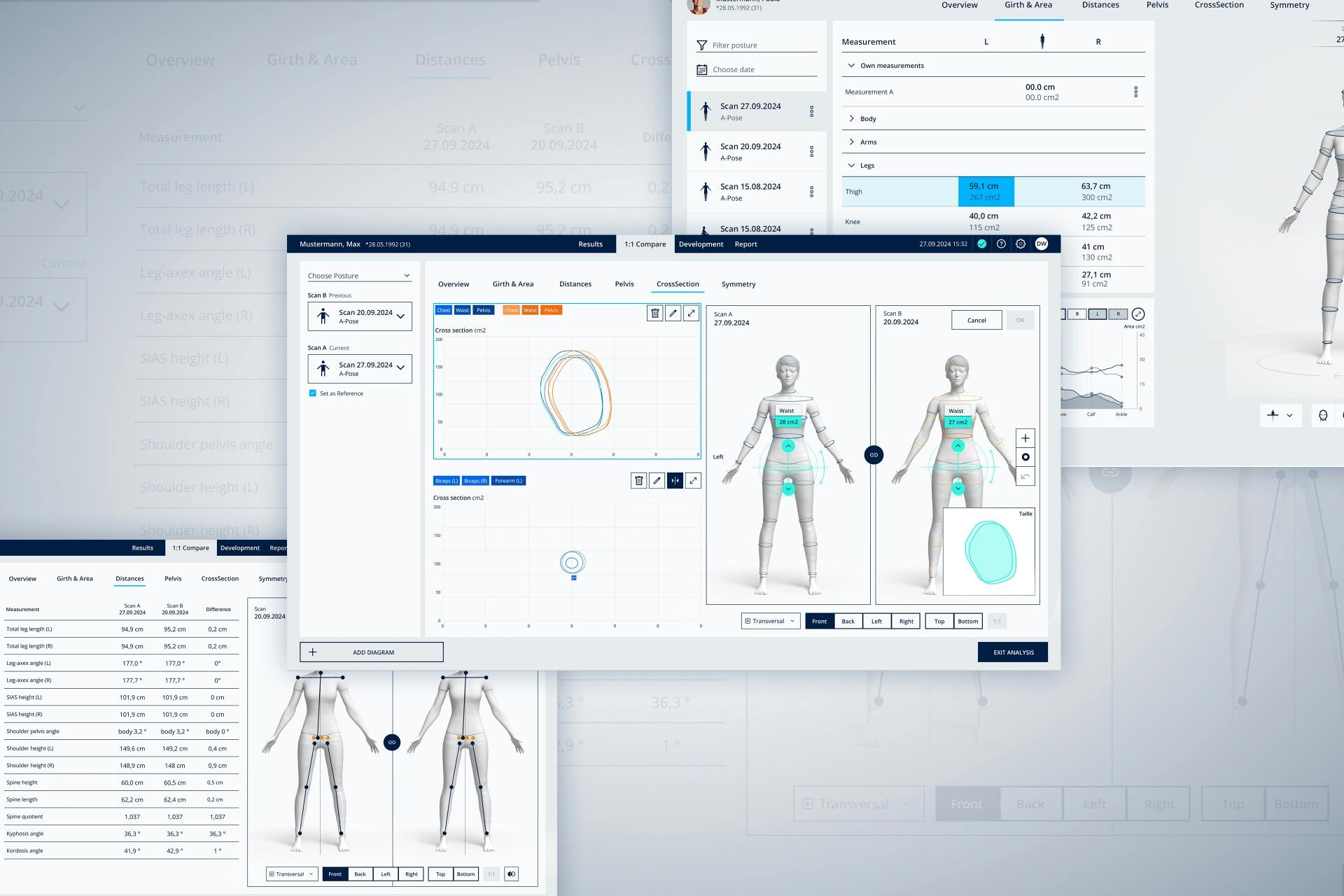
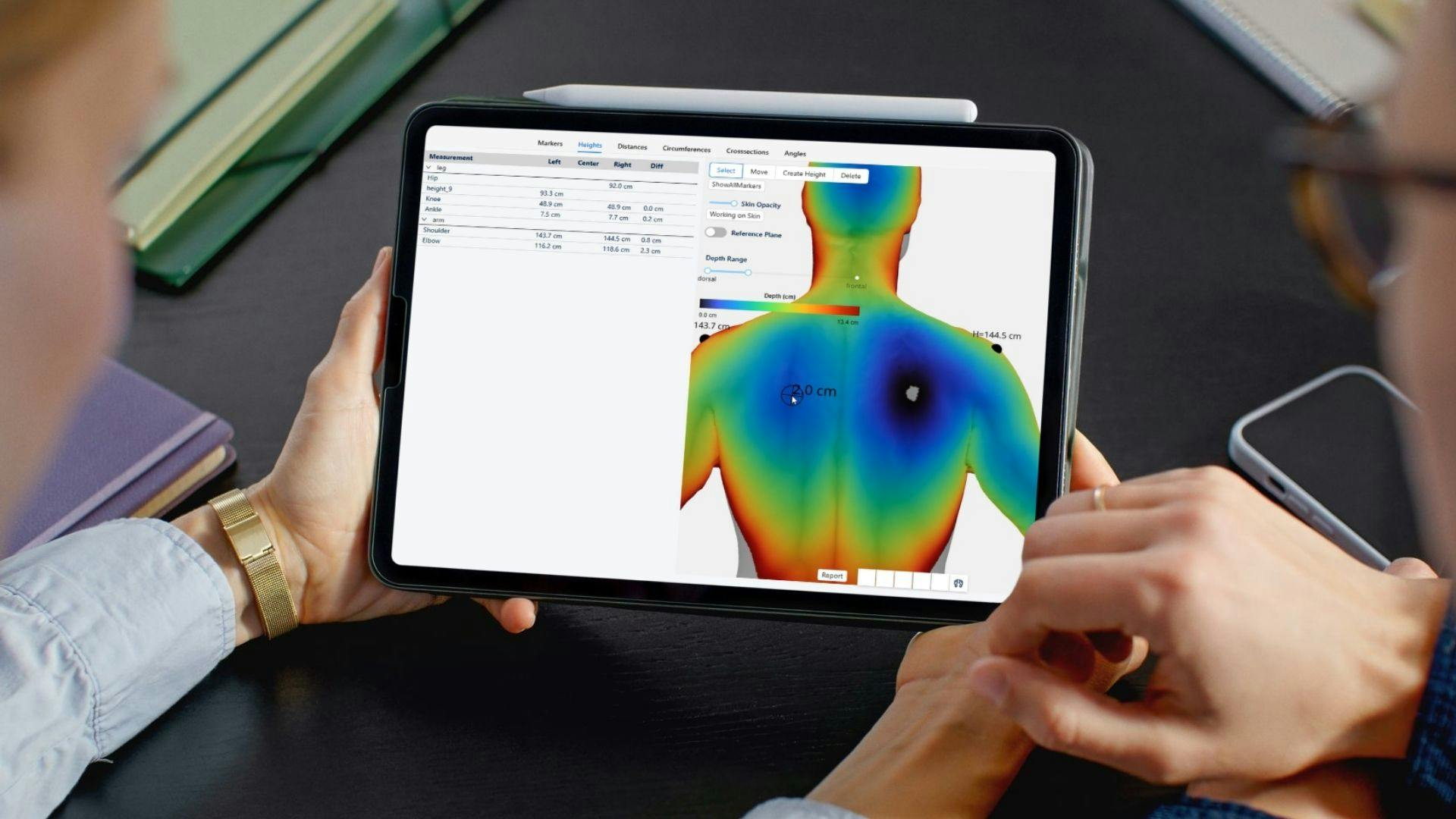
There are different systems for assessing the body and each has its own advantages. Due to its speed, accuracy, ease of use and relatively low investment, the BodyLoop 3D body scan platform is a multi-talent and suitable for many areas of application – especially performance enhancement, rehabilitation, prevention and health maintenance.
Menü
The future blog of the Machine Vision People
Smart Body MeasurementBody Scanner Comparison
BodyLoop 3D Body Scanner – Complete Technology Comparison
Choosing the right body scanning technology can significantly enhance the accuracy of your assessments and provide valuable insights for decision-making. This comprehensive comparison examines how BodyLoop performs against major competing systems, revealing why professionals choose VITRONIC's solution for precise, fast, and cost-effective measurements.
What makes the BodyLoop solution different from other body assessment systems?
Modern technologies enable precise body measurements, supporting applications ranging from performance optimization for professional athletes and injury prevention to rehabilitation and health promotion. The BodyLoop 3D body scanner delivers highly accurate body data with a short processing time, making it a versatile tool across these fields.
But what sets the BodyLoop platform apart from other systems on the market? And who benefits most from VITRONIC's innovative solution? This article provides the answers.
3D body scanner BodyLoop versus dynamic 4D capturing systems
If one compares the BodyLoop to 4D capturing systems, the most obvious difference is that the 3D body scanner enables static body measurement while dynamic 4D scanners also offer limited motion capture. However, there are three other major distinctions between the technologies that should be considered.
Price:
- BodyLoop is significantly more affordable and accessible.
- Dynamic 4D scanners are considerably more expensive.
Ease of use:
- BodyLoop is intuitive and requires no specialized training.
- 4D systems are more complex and require operator expertise.
Space requirements:
- The BodyLoop 3D body scanner requires relatively little space.
- Dynamic 4D scanners require a lot of space.
Conclusion:
Due to these characteristics, the BodyLoop represents a comparatively slim and practical solution for sports, medical and biomechanical environments and research. With its user-friendliness and low investment requirements, it is particularly popular in professional sports, biomechanics, the medical sector, and in the filed of longevity.
4D scan systems on the other hand, are mainly used for research & development in life science, entertainment and biomechanics.
3D body scanner BodyLoop versus motion-capturing systems
Motion capturing systems provide speed and movement measurements. This requires multi-camera installations, which generally necessitate large areas for capturing dynamic motion. Motion capturing systems are typically only used in professional biomechanical laboratories or research facilities. The reason for this, apart from the large space they occupy, is the high level of expertise necessary to operate them properly. In this respect, they are to a certain extent the opposite of the BodyLoop, which can be used almost without training and enables static measurements instantly without long term preparation of technical equipment. They are also extremely different in terms of the investment required.
Measurement functionality:
- BodyLoop: Static measurements in 0.3 seconds.
- Motion-capturing: Dynamic motion analysis using multiple cameras.
Costs:
- BodyLoop: Far more cost-effective.
- Motion-capturing: Extremely high investment costs.
User-friendliness:
- BodyLoop: Easy to operate, no special training needed.
- Motion-capturing: Requires high technical expertise.
Applications:
- BodyLoop: Broad range, from sports to rehabilitation.
- Motion-capturing: Primarily used in research labs.
3D body scanner BodyLoop versus hand scanners
Handheld scanners are typically used to capture only details of a certain body part, e.g. a hand or foot, and they need seconds to minutes to do so. They are not suitable for a large-area body scan due to the amount of time this would take and the fact that they would have to be repositioned several times. The accuracy of the scan would be very limited as the person being scanned would inevitably move during the process.
The BodyLoop, however, is used for capturing data of the complete body in one shot with high precision in 0.3 seconds. This provides comfort and ease for the operator and the person being examined.
To gain an overview of the body's status and take a closer look at additional details, the technologies, handheld scanner and BodyLoop, can also be combined very well.
Measurement functionality:
- BodyLoop: Full-body scan in 0.3 seconds.
- Handheld scanners: Detailed scans of specific body parts take longer.
Accuracy:
- BodyLoop: Precise, no motion errors.
- Handheld scanner: Prone to motion artifacts due to longer scan times.
Applications:
- BodyLoop: Full-body analysis for sports, medicine, and rehabilitation.
- Handheld scanners: Best for detailed scans of specific areas.
Conclusion:
Combining BodyLoop with handheld scanners allows for comprehensive full-body and detailed analyses.
3D body scanner BodyLoop versus Dexa scanners
Dexa Scanners utilize low x-ray radiation and are mainly used to measure bone mineral density. Their application is therefore very specific. The BodyLoop can be a valuable addition to the DEXA technology. For example, when determining bone density to assess osteoporosis, 3D full-body scans can be carried out to measure their influence on whole-body statics.
Another difference between Dexa and BodyLoop scanners, apart from the area of application, is the way they work. As mentioned, the Dexa technology operates with x-rays, VITRONIC’s system makes use of visible light and visualizes the outer body surface for measurements and posture analysis. Visible light is not only eye-safe, but non-invasive and has no known side effects.
Measurement functionality:
- BodyLoop: Full-body analysis of external body structure.
- Dexa: Specific bone density measurement.
Technology:
- BodyLoop: Visible light, safe and non-invasive.
- Dexa: X-ray technology, specialized for medical use.
Applications:
- BodyLoop: Broad range from posture analysis to rehabilitation.
- Dexa: Specialized applications like osteoporosis diagnostics.
Conclusion:
The BodyLoop complements Dexa scanners by providing additional insights into body statics and overall posture.
3D body scanner BodyLoop versus mobile turntable scanners
An alternative to the BodyLoop 3D body scan system are mobile turntable scanners, which enable a 360° body scan with the help of several sensors. However, this requires the person to be examined to remain still on a rotating platform for a duration exceeding 30 seconds. The BodyLoop needs less than a second. This is more convenient, ensures the accuracy of the scan and makes mass scans easy to realize.
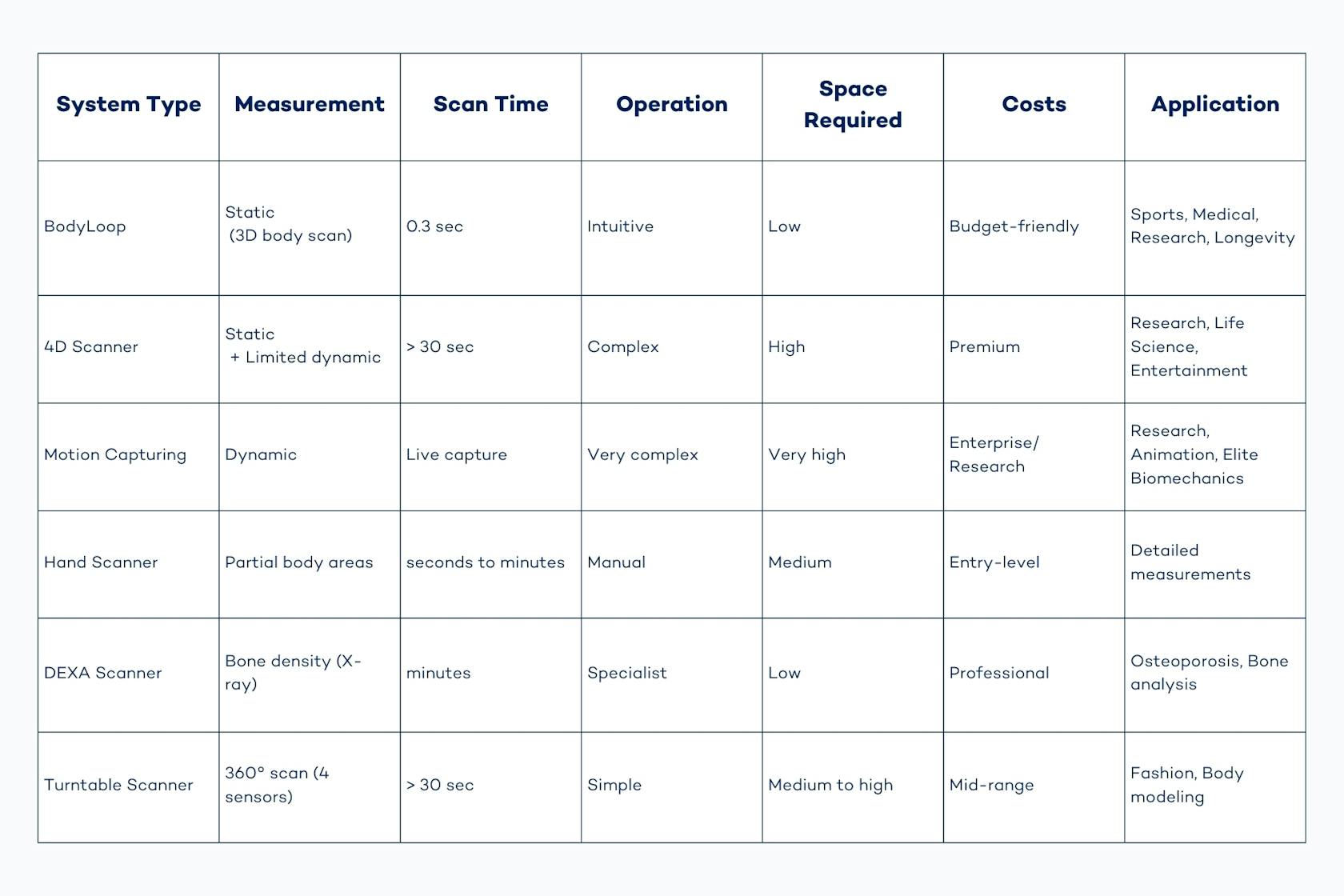
Comparison table: 3D Body scanner BodyLoop versus other systems
BodyLoop
In short:
- Fast and precise: BodyLoop captures the entire body in just 0.3 seconds with high accuracy. No repositioning or complex setup needed.
- User-friendly and compact: The system is intuitive to operate, and fits into smaller spaces compared to 4D scanner or motion capture systems.
- Cost-effective and versatile: BodyLoop is far more affordable than most alternatives, and it’s suitable for multiple use cases from body tracking to rehabilitation.