Traffic TechnologySemi-stationary speed enforcement in Uruguay
VITRONIC provides flexible systems and customized trailers
Uruguay is taking a new approach: For the first time, the South American country, under the leadership of the Ministry of Interior, is using semi-stationary enforcement systems for speed control. Following a public tender, the contract was assigned to Ciemsa and VITRONIC. The technology of the globally active solution provider not only impressed with its simple handling, application diversity and LiDAR-based precision, but also with its automatic number plate recognition (ANPR).
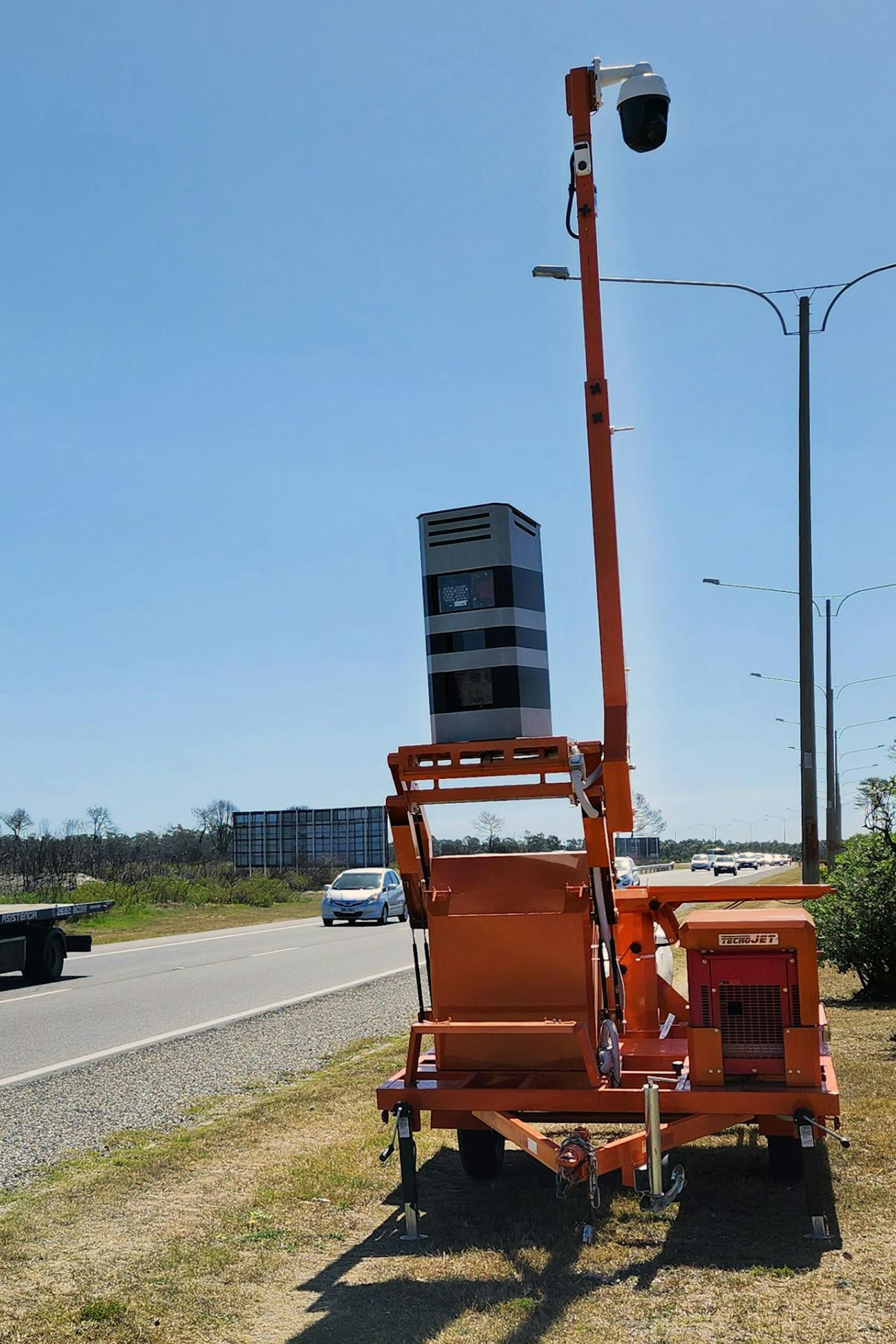
Above all, there was one requirement for the new traffic systems, the speed enforcement will be carried out at changing locations with varying conditions. This means that the traffic technology used must be flexible and applicable to the different circumstances. VITRONIC's semi-stationary system offers ideal prerequisites for this. It can be easily configured at any new site and allows, among other things, the monitoring of up to 4 lanes simultaneously, covering both simple single-lane and complex multi-lane roads.
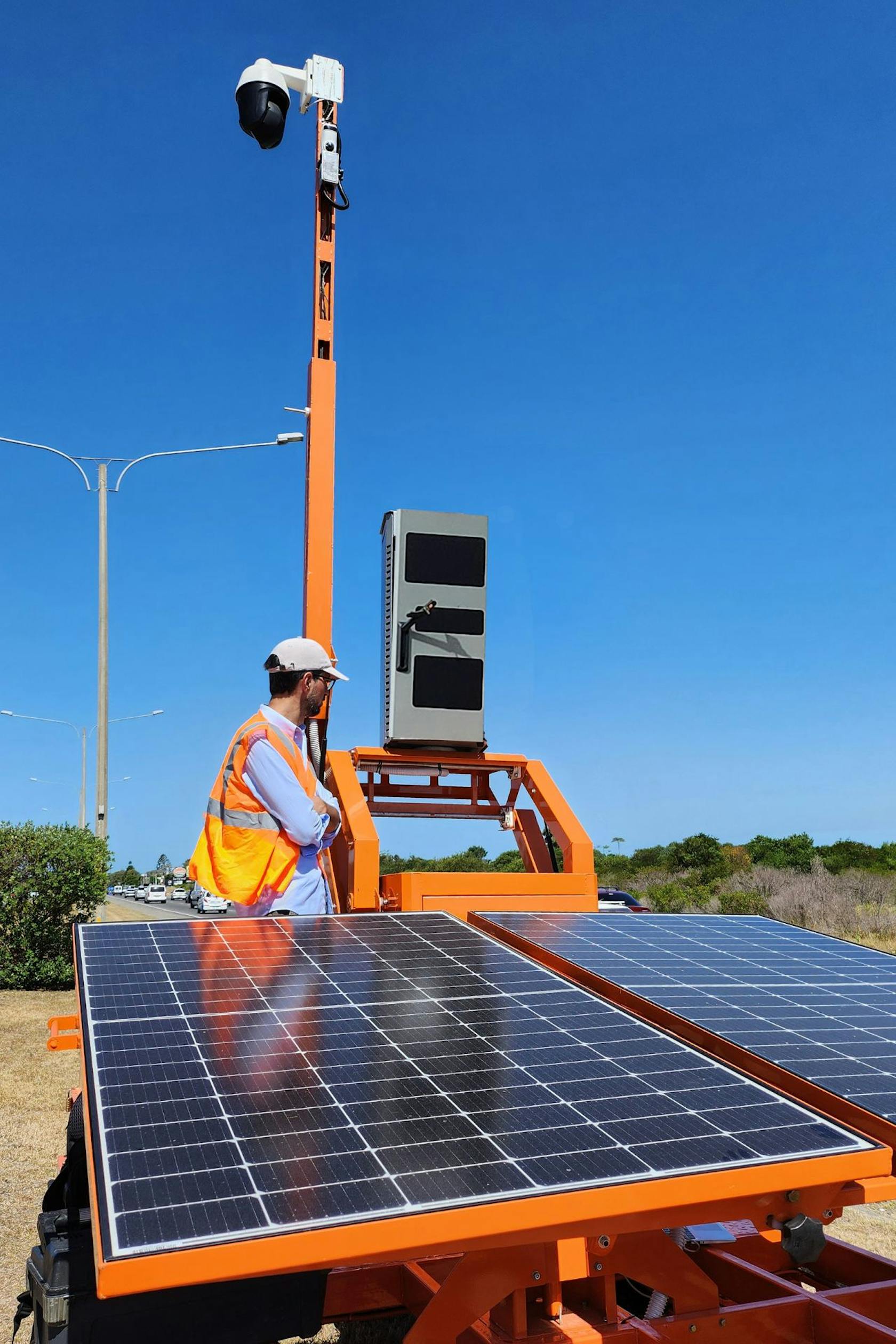
Tailor-made mobility
The project also sets a number of requirements for the trailer used to transport the speed enforcement system. It must be possible to install it on unpaved areas and grass, support autonomous operation based on solar cells and diesel generators to compensate for a lack of infrastructure - and position the sensors at a height that prevents them from being blocked by pedestrians.
There is no standard solution for this. It was important to work closely with Ciemsa to develop an individual solution with a trailer and a mounted housing for the customer."
Number plate recognition against car theft
In addition to increasing safety through speed enforcement, the semi-stationary traffic enforcement systems are aimed at improving another area. Car theft is a major problem in Uruguay. With the additional feature of automatic number plate recognition, the police can also utilize the new systems to capture stolen vehicles or vehicles with stolen number plates as they drive by. A list of the recorded license plates as well as images of the vehicles are sent to a server every minute.
So far, VITRONIC has supplied a total of five measuring systems POLISCAN FM1 and Compact City Housing (CCH) systems for the project. Based on the results so far, especially with the ANPR function, an order for ten more systems is currently being evaluated.
About VITRONIC
VITRONIC is the world's leading innovation driver for machine vision, enabling its customers to master the challenges of tomorrow.
The global group of companies develops forward-looking solutions in the form of specialized products and software for image-based quality inspection, identification and process optimization, which find application in the growth sectors of automation and traffic engineering.
VITRONIC solutions make an important contribution to helping shape a safe and sustainable world. The existing limits of what is economically feasible are constantly being questioned in order to achieve the highest quality and productivity, for example in the production of automotive and pharmaceutical companies. Worldwide, Auto-ID solutions in logistics centers and at cargo airports, take over the reliable and efficient recording of shipments and thus ensure a transparent flow of goods.
In the transport sector, VITRONIC offers leading technology for increased safety on the roads, for optimizing traffic flow and for recording road usage.
Open and honest dealings with our customers form the foundation for jointly exploiting technological and process potential to the full. Joint success forms the basis of long-term cooperation with companies such as B. Braun, BMW, Daimler, DHL, UPS, Fresenius and Sanofi as well as with public clients.
Since its foundation in 1984, VITRONIC has been growing continuously for 40 years. The current annual turnover (2025) is 231 million EUR and the company is currently represented on five continents in over 80 countries with approximately 1,400 employees. Since 2024 the company is part of ITIS Holding, leveraging the strengths of both entities, creating a strong end-to-end ITS and automation provider.
Development and production of VITRONIC systems are located at the company headquarters in Wiesbaden. VITRONIC subsidiaries span across all continents, including North and South America, Europe, Asia, Africa, and Oceania. Additionally, a global network of sales and service partners ensures localized support for international customers.