Traffic TechnologyInnovative Traffic Technology at the ITS World Congress
“Experience Future Mobility Now” is the theme of the ITS World Congress in Hamburg, October 11 to 15, 2021. VITRONIC will present visitors with versatile, flexible, and user friendly traffic technology solutions at booth B.5230 in Hall 5. The company will address two of the most important questions of future mobility: the climate crisis and increased traffic volume in cities. VITRONIC is tackling these challenges by developing innovative toll systems and participating in research projects that focus on protecting vulnerable road users (VRUs), along with other issues.
Efficient Toll Systems for Modern Roads
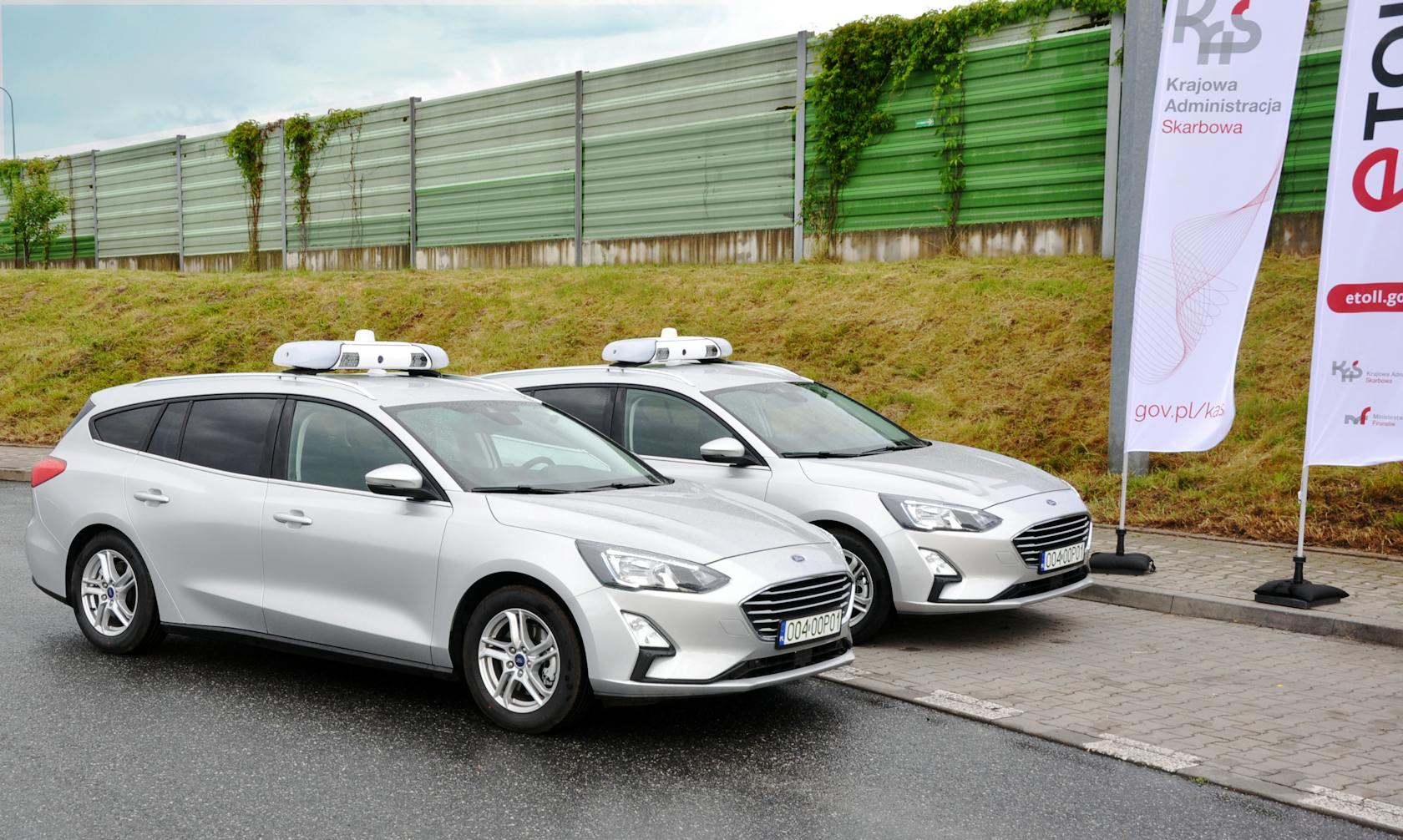
The transport revolution not only opens new doors for mobility, but also requires substantial investments to support these alternative ideas. Forward-thinking toll technology offers its users a high degree of flexibility and makes automatic enforcement possible, both while in motion and stationery. Visitors to the VITRONIC booth at the ITS World Congress will learn more about the first mobile toll enforcement vehicles used in conjunction with the Electronic Toll Collection System of the National Revenue Administration in Poland. The vehicles detect, identify, and classify the monitored vehicles automatically while in motion.
Mobile Toll Enforcement with Enforcement Bar
The heart of these patrol vehicles is Enforcement Bar. It is a mobile, fully automatic number plate identification and classification system that enables the automatic recognition of number plates (ANPR) as well as the classification of different vehicle classes. Furthermore, the system’s technology makes it possible to recognize number plates in four directions. It is able to achieve a very high detection rate, even at high speeds, and allows enforcement officers to concentrate on identified suspect cases. The system transmits the collected data to the Electronic Toll Collection System, where they are checked in database.
Intelligent Intersections for Optimized Traffic Flow
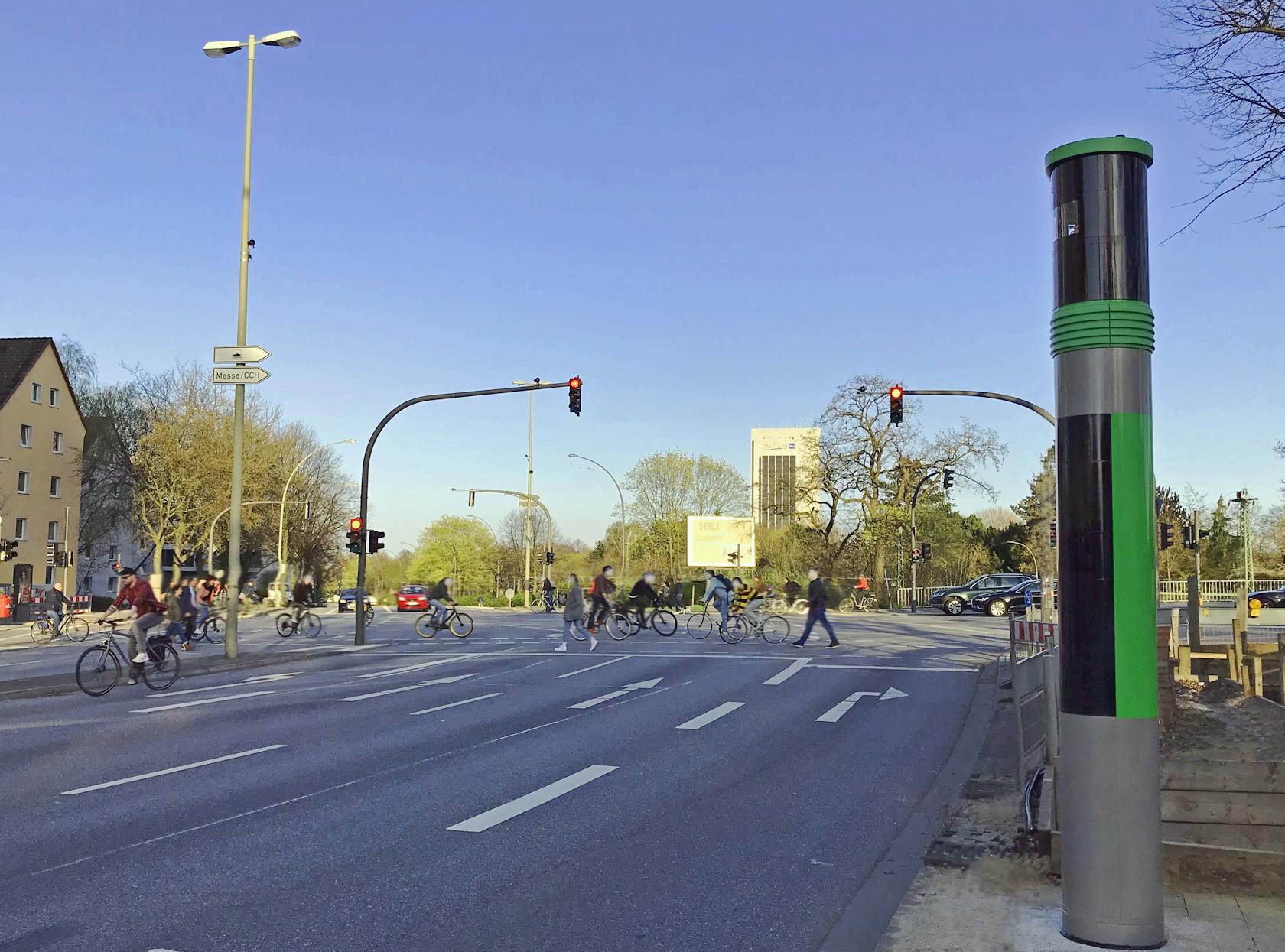
Cooperation in research and development is a requirement for producing innovative mobile solutions. VITRONIC will present some of its extremely interesting projects at the ITS World Congress. For example, the company will show how sensor systems can be used to optimize traffic flow and protect VRUs at intersections. On the test track for automated and connected driving (TAVF), within close proximity to the exhibition center, visitors can experience the technology live at a test installation. Together with the German Aerospace Center (DLR) and T-Systems, VITRONIC will test its systems at a dangerous location. This particular location is an intersection known to be a congested traffic junction (K94) within Hamburg city limits. To record flowing traffic, two video cameras were installed at the crossing.
The real-time data captured there is available for further processing by the signal control system’s enforcement procedure at junction K94. The goal is to optimize traffic light control, so that the waiting and travel times for all road users is reduced. For example, green phases during peak times can be lengthened, so that more cyclists and pedestrians can cross the street safely.
Smart Intersections That Prevent Accidents
Another development project with the Free and Hanseatic City of Hamburg, Continental, and the Deutsche Telekom is underway. Here, VITRONIC’s IDTE solution (Intelligent Detection and Tracking Equipment) surveys an entire intersection area and provides recorded data from traffic objects for analysis purposes. The system warns road users of possible collisions in real time via a smartphone app. The Continental solution uses one of Deutsche Telekom’s cloud computer in the immediate vicinity to calculate the traffic flow for the next five seconds using GPS and speed data. In addition to detected traffic objects and traffic lights data, an accurate digital map made available by the Agency for Geoinformation and Surveying (LGV) of the city of Hamburg is used. Warning messages for impending collisions are in turn sent via the Deutsche Telekom’s Low Latency Network to road users with the corresponding T-Systems app on their smartphone.
About VITRONIC
VITRONIC is the world's leading innovation driver for machine vision, enabling its customers to master the challenges of tomorrow.
The global group of companies develops forward-looking solutions in the form of specialized products and software for image-based quality inspection, identification and process optimization, which find application in the growth sectors of automation and traffic engineering.
VITRONIC solutions make an important contribution to helping shape a safe and sustainable world. The existing limits of what is economically feasible are constantly being questioned in order to achieve the highest quality and productivity, for example in the production of automotive and pharmaceutical companies. Worldwide, Auto-ID solutions in logistics centers and at cargo airports, take over the reliable and efficient recording of shipments and thus ensure a transparent flow of goods.
In the transport sector, VITRONIC offers leading technology for increased safety on the roads, for optimizing traffic flow and for recording road usage.
Open and honest dealings with our customers form the foundation for jointly exploiting technological and process potential to the full. Joint success forms the basis of long-term cooperation with companies such as B. Braun, BMW, Daimler, DHL, UPS, Fresenius and Sanofi as well as with public clients.
Since its foundation in 1984, VITRONIC has been growing continuously for 40 years. The current annual turnover (2025) is 231 million EUR and the company is currently represented on five continents in over 80 countries with approximately 1,400 employees. Since 2024 the company is part of ITIS Holding, leveraging the strengths of both entities, creating a strong end-to-end ITS and automation provider.
Development and production of VITRONIC systems are located at the company headquarters in Wiesbaden. VITRONIC subsidiaries span across all continents, including North and South America, Europe, Asia, Africa, and Oceania. Additionally, a global network of sales and service partners ensures localized support for international customers.