The "Smart City Matters" study shows that the digitalization of cities depends not only on technology but also on integration into existing structures and citizen participation. Many cities face challenges such as resource shortages and complex administrative structures, which often stall the implementation of Smart City projects. VITRONIC supports cities with practical, integrable solutions in traffic management, sustainability, and citizen participation that can be seamlessly introduced into existing systems. The goal is to make cities more efficient, environmentally friendly, and livable.
Menü
The future blog of the Machine Vision People
Smart MobilitySmart City: What Truly Drives Cities Forward Today
How Intelligent Solutions are Transforming Cities and Why Pragmatic Implementation is Key to Success
Smart City is one of the most defining topics in urban development. Digital technologies aim to make cities more efficient, sustainable, and livable. At the same time, practical experience shows that there is often a gap between strategic ambition and actual implementation.
The "Smart City Matters 2025" study provides a well-founded and realistic assessment of this topic. It was conducted by F.A.Z. Business Media together with Deloitte and MobilityMindz. The study is based on qualitative in-depth interviews with international representatives from cities, business, and research.
The study paints a clear picture of the current state: Successful Smart City initiatives emerge where digital solutions are consistently aligned with real municipal needs. Technological innovation alone is not enough. What matters is feasibility, integration into existing structures, and the ability to achieve sustainable impact with limited resources.
VITRONIC supports cities in meeting this challenge, particularly in the areas of Smart Mobility, traffic management, and data-based decision-making.
Technology as a means to an end
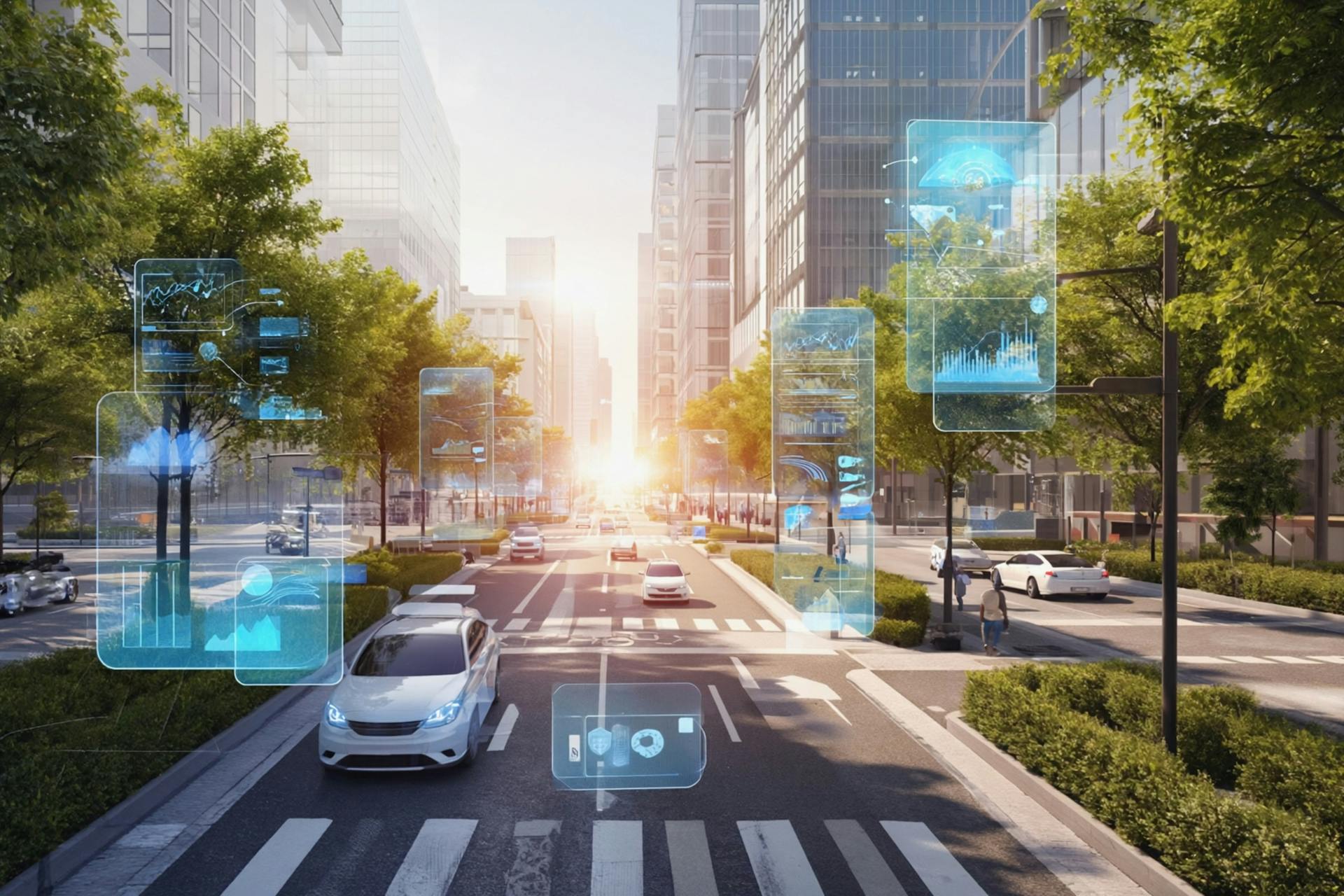
The "Smart City Matters" study shows that the success of Smart City initiatives is not defined by the amount of technology used, but by its concrete impact on the quality of life in cities. Technology is used as a tool to address issues such as traffic congestion, emissions, and inefficient resource usage. Successful Smart Cities focus on measurable improvements in areas like mobility, climate protection, and social participation.
VITRONIC shares this perspective: Our solutions in Smart Mobility give cities the ability to efficiently manage traffic flows and reduce emissions, without the technology itself being the focus. Instead, we focus on practical applications that deliver real results in daily operations.
Successful Smart City initiatives focus on solutions that work in real urban environments, not on visions disconnected from operational realities.
From big strategies to incremental implementation
The study emphasizes that cities are increasingly moving away from rigid, comprehensive Smart City master plans. Instead, pragmatic approaches are coming to the forefront. Successful cities particularly focus on:
- Clearly defined use cases with concrete, measurable benefits
- Pilot projects that are quick to implement and allow for early learning
- Iterative development rather than long-term fixed strategies
In practice, this approach allows cities to gain experience early on, limit risks, and scale solutions gradually. Smart City is thus not seen as a one-off transformation project, but as an ongoing process that is adapted to real organizational, financial, and societal conditions.
This pragmatic approach has also proven successful in VITRONIC’s collaboration with cities. Our traffic management solutions are flexible and modular, allowing cities to move forward in small, measurable steps. This gives them the opportunity to achieve their goals step by step and sustainably.
Collaboration as a prerequisite
Smart City is a collaborative project. The study highlights that digital urban development only succeeds sustainably where collaboration is actively practiced. Silo structures within administrations and a lack of coordination between public actors, businesses, research, and civil society are among the greatest barriers to implementation.
International leaders show that cross-sector cooperation, open interfaces, and exchange between cities are essential to avoid silo solutions and achieve economies of scale. Learning from each other is understood as a strategic advantage.
Citizen participation as a success factor
Another key finding of the study is the role of citizens. Smart Cities are not only created through technological or administrative decisions but through active participation. Cities that engage people early on build trust, acceptance, and long-term impact.
Smart City lives from citizen participation.
Formats like real-world laboratories, participatory platforms, or dialogue-oriented participation models make digital transformation tangible and strengthen the sense of shared responsibility. Citizens thus move from being a target group to co-creators of urban development.
Resources, structures, and reality
Regardless of regional differences, similar challenges are emerging worldwide. Limited financial resources, insufficient personnel, and complex organizational structures are hindering the implementation of many Smart City initiatives. Legal frameworks and data protection and transparency requirements also need to be carefully considered.
The study emphasizes that successful cities do not ignore these frameworks but instead develop solutions that work within existing structures, realistically, integratively, and sustainably.
Sustainability as a unifying element
Sustainability and climate protection are considered key drivers of smart urban development. It is shown that smart city initiatives are increasingly seen as instruments of ecological transformation. Data-based solutions help cities optimize energy consumption, reduce emissions, and make urban systems more resilient to climate change.
In the area of mobility in particular, it is clear how closely digital control, environmental goals, and quality of life are linked.
The role of VITRONIC: A partner for the Smart City
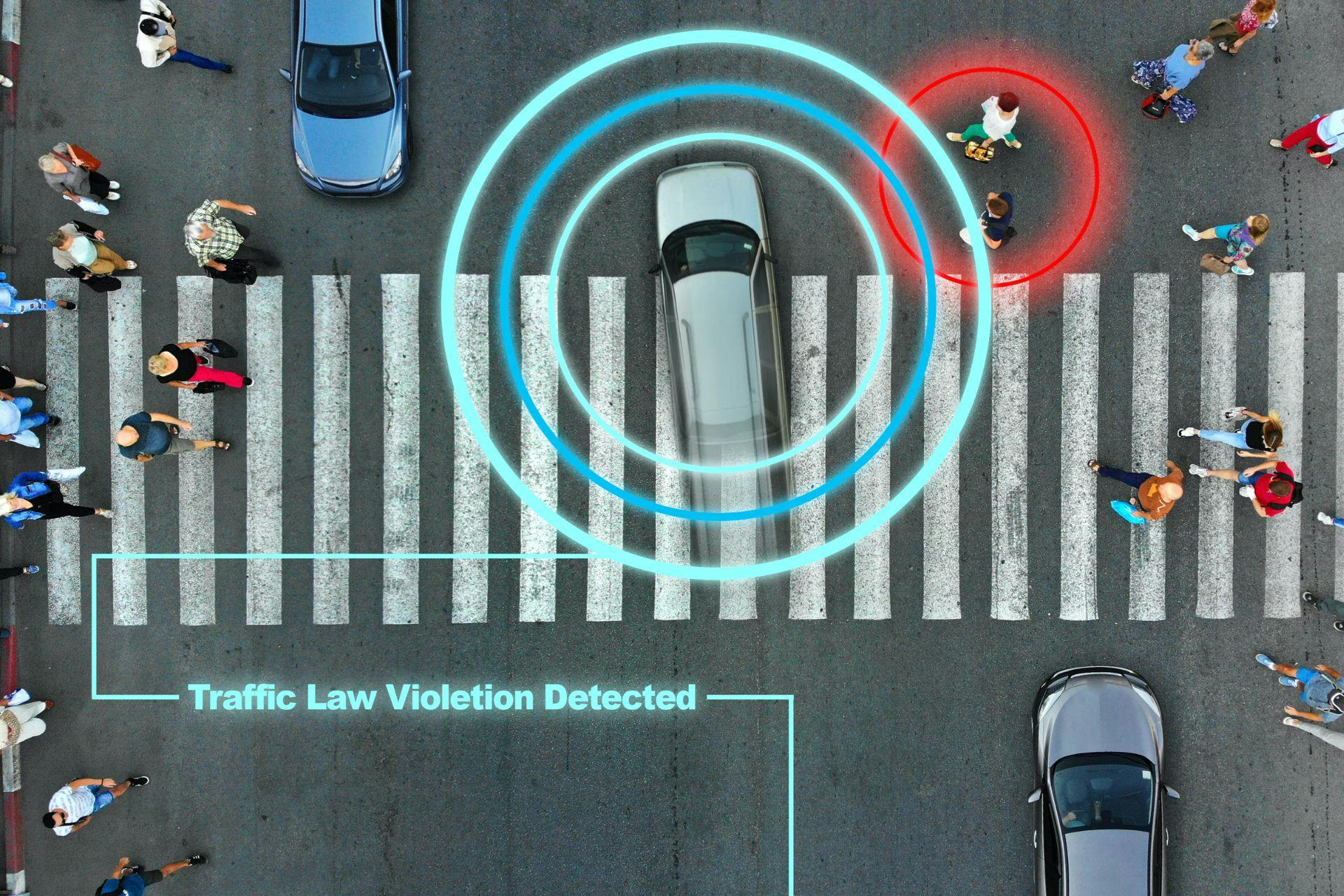
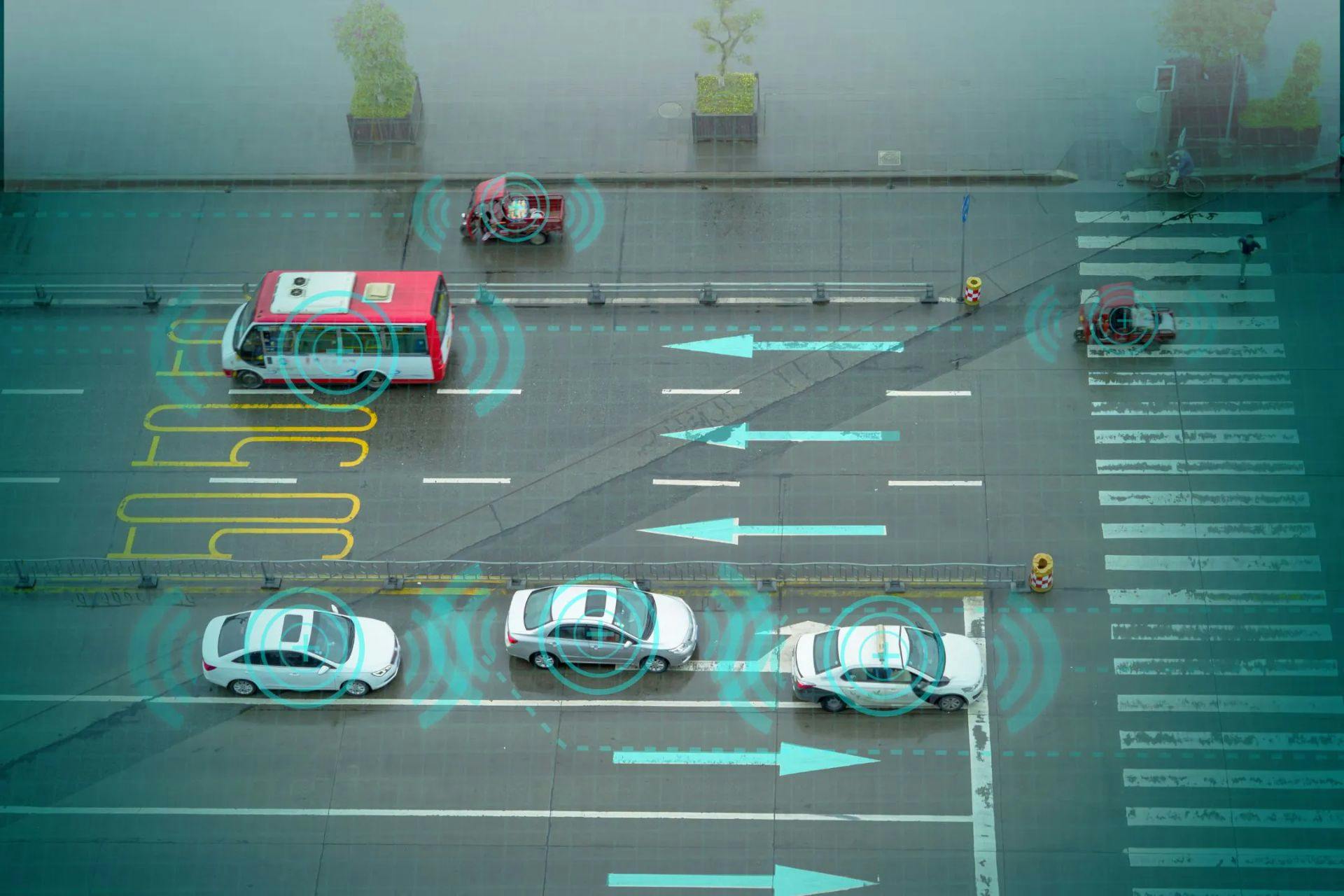
In the study, VITRONIC is positioned as a technology and practice partner in the field of Smart Mobility. The focus is on traffic monitoring, traffic safety, and data-driven traffic control. The goal is to create solid decision-making foundations that allow cities to efficiently manage traffic flows and increase road safety.
At the same time, our representatives address the real challenges of implementation: organizational complexity, long decision-making processes, and the need for societal acceptance. The approach is clear and pragmatic: to meet cities where they are and offer solutions that can integrate into existing infrastructures.
This positions VITRONIC as a partner for implementable Smart Mobility solutions that connect technological possibilities with the real demands of urban systems.
Conclusion
In short:
- Smart Cities emerge from practical, scalable solutions that meet the real needs of cities.
- VITRONIC offers integrated solutions that fit seamlessly into existing systems and deliver measurable results.
- Citizen participation, collaboration, and sustainability are crucial for the success of Smart City initiatives.
- VITRONIC actively contributes to making cities more efficient, safer, and sustainable.